6.29.2008

6.27.2008
Spider in my bathroom
I found an even larger one hiding in my mop with approximately 15 baby cockroaches. In one of my most candid, clearheaded speeches of the year, I openly declared war in my bathroom. The shelling begins tomorrow.
Hospital (2)
At about 5:00 in the afternoon I began to have stomach pains. I had just begun Oral English interviews with students. By 7:00 p.m. the pains had become markedly worse. I conducted all of the interviews just outside Bethany’s apartment because it was a sunny day. I went inside and drank some water.
By 8:30 p.m. I had thrown up in Bethany’s bathroom, and I was trying to remain motionless on the bed as my stomach continued to get worse. At around 10:30 p.m. I could no longer handle the pain and, in a plaintive voice, asked Bethany to call the Peace Corps Medical Officer (PCMO) in Chengdu. The details of these phone calls are very hazy. Actually, from 10 p.m. Wednesday until 6 a.m. Thursday I can remember specific events, but their order and what happened during the gaps I cannot recall exactly. I remember the pain that would not go away and instead got worse and worse.
Through a series of phone calls between the foreign affairs representative, the deans of the English Department, my counterpart, and the medical staff in Chengdu, a car was arranged to take me to the hospital. I remember a fog of incidents that were designed to discover what was wrong with me: drawing my blood (my white blood cell (leukocyte) count was around 12,000), taking an x-ray (there seemed to be a bright white spot on the photo that alerted the doctor), a series of stomach probes to determine if there was a problem with my appendix, an ultrasound, and, finally, an intravenous drip feed which included several different medications.
Throughout this time I was almost completely non-communicative. Walking through the halls I would moan because the pain was so excruciating. The two deans from the English Department had met us at the hospital and they stayed with me until around 3 a.m. The foreign affairs representative, the deans, and even the driver helped to support me as I walked from ward to ward for different tests. At one point I had to get in the car to be transported to a different ward in the same hospital (the campus included several different buildings) and another time I was taken to a different building to go to the bathroom. The pain had taken away all of my inhibitions and dignity. I was pathetic.
Of my surroundings I remember the green tiles on the walls the best. The long, old hallways brought back feelings from my childhood, but I cannot remember exactly why the hospital seemed so familiar. The bed sheets were dirty and they asked for new sheets before I started my IV. I had to go to the bathroom again at some point, and the foreign affairs representative helped me by carrying my IV down the hall and into the bathroom (the IV stands were made of wood and had no wheels). When I got back to my bed, the blood from my arm had filled the bottom part of the IV system and wouldn’t go back into my arm. The nurse seemed upset and she disconnected the plastic in the center of the IV, sprayed my extra blood on the floor beneath my bed, and reconnected the IV. It started to work again.
By the time I woke up the next morning I had slept for around 2 hours, but the pain had decreased significantly. After taking blood again and determining that my leukocyte count was still too high (10,000), the doctor recommended that I stay in the hospital for more treatment. The PCMO agreed and I spent the day watching bottle after bottle replaced during my second round of treatment. After going to the bathroom on one occasion, my hand started to develop a bump where fluid was gathering and the IV had stopped. The nurse put a new IV in my other hand and it continued: glucose, some kind of sodium chloride solution, and several different medications. That night they took more blood, but my leukocyte count remained high. I was told to stay another night.
The next morning, after more phone calls between the PCMO and the attending doctor at the hospital, I was told that I might be able to go home. A fourth blood test was done and it came back with a leukocyte count of around 5,000. I left the hospital and went home.
What was wrong with me? This question is difficult to answer specifically, though a general answer to the question is that food led to this problem. Earlier in the day, I made fried Chinese cabbage and rice. I probably used too much oil, and the cabbage led to a buildup of gas in my intestines. The question of whether there was a blockage or not was never answered.
Throughout this ordeal I was taken care of by people from the college. My site-mate, Bethany, accompanied me to the hospital, the foreign affairs representative arranged for the car to take me to the hospital and, when I arrived, the deans were waiting to help in any way they could (and it was around 12:30 or 1:00 a.m.). The next morning students began to arrive with bananas and their class textbooks. My counterpart brought me a large bouquet of flowers and a stuffed-animal goat with a scarf. My counterpart stayed with me for the entire day, contacting the PCMO when needed, talking with the doctor, and making sure I had anything and everything I needed to be comfortable. Students came and went, although one of my freshmen students spent the night in the hospital.
All of the bills (excepting the first registration fee) were covered by the school. Peace Corps will reimburse them later, but it is a requirement to pay for things as they are provided. The x-ray, ultrasound, blood tests, doctor fees, room fee, etc. were paid for, essentially, as they were provided. China’s health care system changed from one of almost universal access to that of “show the money and we’ll help you out.”
The experience was very unpleasant. The conditions were generally satisfactory, although I think they could have been much better. Trying to navigate the squat toilet with an IV in one hand and the bottle in the other is something I don’t want to do again any time soon. The first morning a woman came into the hall where I was sleeping, pulled out a bedpan, and made use of it. The smell of the bathroom wafted into the room where I stayed the second day and night, and people kept coming and going.
There were two other beds in my room, though I think there was only one other patient. He was an older man. I don’t know why he was in the hospital, but he had a type of catheter in his belly and he had a terrible cough during the night. Through this experience I saw how culture affected hospital stays in China. The family stayed with the old man around the clock. There were 3 people who were almost always with him, and when any of them left other family members or friends would arrive to talk with him or help out in some way. They brought their food from home and cooked it in the hospital. They helped him wash and they changed his IV.
The leader of our department could not teach during the last year because he has cancer. He was in a different ward and during a walk my counterpart invited me to go with her to visit him. I remember meeting him at the banquet when I first arrived at the school. He was a very thoughtful person who spoke in smooth, deliberate sentences. He was the biggest teacher in the English department as well.
His room had 8 beds. His wife was busy cooking dinner when we arrived. He recognized me and we spoke for a few minutes about basic things (why I was in the hospital, how my semester was, etc.). I noticed that he was markedly thinner. He was wrapped in a blanket, though the room was somewhat warm. After visiting him, my counterpart said that he was very happy to see me (they had spoken some Chinese that I didn’t understand). I felt very sad, though I hardly know the man.
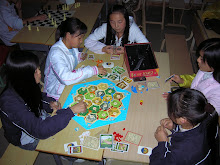
In my spare time I studied Chinese and slept. My students kept me company by talking with me or teaching me card games. I explored, in some sense, a piece of Chinese collectivism at work. Students left their classes or skipped them to come and see me. I expect that certain students were expected to come and see me to fulfill a duty. I don’t say this to diminish the courtesy of their visits, but to show how the Chinese classroom works. Besides, I may be wrong about the students being expected to come.
Each class has a monitor who is in charge of the affairs of the class. They are the overall leader of the class and most seem to take their jobs very seriously. As I found out one day, there are other types of jobs as well: cleaning monitor, teaching materials monitor, etc. (perhaps there are 10 different jobs). It generally falls upon the leader to communicate with others or represent the class when things happen (if a student is ill, etc.).
When I got back to the school I met several students along the road to my apartment. They asked how I was doing. I met a student who had already visited me in the hospital and she said, “Oh! The other class is going to see you right now. There are 20 students.” She called one of the students and told them that I had left of the hospital. So they went shopping instead. That’s another aspect of Chinese culture: the ability to roll with the situation. Generally there is a more fatalistic bent to their thinking.
I bought some gruel at the store next to the school gate. I climbed the stairs to my apartment, opened the door, sat on my couch, and ate for the first time in 45 hours, happy to be home again.
By 8:30 p.m. I had thrown up in Bethany’s bathroom, and I was trying to remain motionless on the bed as my stomach continued to get worse. At around 10:30 p.m. I could no longer handle the pain and, in a plaintive voice, asked Bethany to call the Peace Corps Medical Officer (PCMO) in Chengdu. The details of these phone calls are very hazy. Actually, from 10 p.m. Wednesday until 6 a.m. Thursday I can remember specific events, but their order and what happened during the gaps I cannot recall exactly. I remember the pain that would not go away and instead got worse and worse.
Through a series of phone calls between the foreign affairs representative, the deans of the English Department, my counterpart, and the medical staff in Chengdu, a car was arranged to take me to the hospital. I remember a fog of incidents that were designed to discover what was wrong with me: drawing my blood (my white blood cell (leukocyte) count was around 12,000), taking an x-ray (there seemed to be a bright white spot on the photo that alerted the doctor), a series of stomach probes to determine if there was a problem with my appendix, an ultrasound, and, finally, an intravenous drip feed which included several different medications.
Throughout this time I was almost completely non-communicative. Walking through the halls I would moan because the pain was so excruciating. The two deans from the English Department had met us at the hospital and they stayed with me until around 3 a.m. The foreign affairs representative, the deans, and even the driver helped to support me as I walked from ward to ward for different tests. At one point I had to get in the car to be transported to a different ward in the same hospital (the campus included several different buildings) and another time I was taken to a different building to go to the bathroom. The pain had taken away all of my inhibitions and dignity. I was pathetic.
Of my surroundings I remember the green tiles on the walls the best. The long, old hallways brought back feelings from my childhood, but I cannot remember exactly why the hospital seemed so familiar. The bed sheets were dirty and they asked for new sheets before I started my IV. I had to go to the bathroom again at some point, and the foreign affairs representative helped me by carrying my IV down the hall and into the bathroom (the IV stands were made of wood and had no wheels). When I got back to my bed, the blood from my arm had filled the bottom part of the IV system and wouldn’t go back into my arm. The nurse seemed upset and she disconnected the plastic in the center of the IV, sprayed my extra blood on the floor beneath my bed, and reconnected the IV. It started to work again.
By the time I woke up the next morning I had slept for around 2 hours, but the pain had decreased significantly. After taking blood again and determining that my leukocyte count was still too high (10,000), the doctor recommended that I stay in the hospital for more treatment. The PCMO agreed and I spent the day watching bottle after bottle replaced during my second round of treatment. After going to the bathroom on one occasion, my hand started to develop a bump where fluid was gathering and the IV had stopped. The nurse put a new IV in my other hand and it continued: glucose, some kind of sodium chloride solution, and several different medications. That night they took more blood, but my leukocyte count remained high. I was told to stay another night.
The next morning, after more phone calls between the PCMO and the attending doctor at the hospital, I was told that I might be able to go home. A fourth blood test was done and it came back with a leukocyte count of around 5,000. I left the hospital and went home.
What was wrong with me? This question is difficult to answer specifically, though a general answer to the question is that food led to this problem. Earlier in the day, I made fried Chinese cabbage and rice. I probably used too much oil, and the cabbage led to a buildup of gas in my intestines. The question of whether there was a blockage or not was never answered.
Throughout this ordeal I was taken care of by people from the college. My site-mate, Bethany, accompanied me to the hospital, the foreign affairs representative arranged for the car to take me to the hospital and, when I arrived, the deans were waiting to help in any way they could (and it was around 12:30 or 1:00 a.m.). The next morning students began to arrive with bananas and their class textbooks. My counterpart brought me a large bouquet of flowers and a stuffed-animal goat with a scarf. My counterpart stayed with me for the entire day, contacting the PCMO when needed, talking with the doctor, and making sure I had anything and everything I needed to be comfortable. Students came and went, although one of my freshmen students spent the night in the hospital.
All of the bills (excepting the first registration fee) were covered by the school. Peace Corps will reimburse them later, but it is a requirement to pay for things as they are provided. The x-ray, ultrasound, blood tests, doctor fees, room fee, etc. were paid for, essentially, as they were provided. China’s health care system changed from one of almost universal access to that of “show the money and we’ll help you out.”
The experience was very unpleasant. The conditions were generally satisfactory, although I think they could have been much better. Trying to navigate the squat toilet with an IV in one hand and the bottle in the other is something I don’t want to do again any time soon. The first morning a woman came into the hall where I was sleeping, pulled out a bedpan, and made use of it. The smell of the bathroom wafted into the room where I stayed the second day and night, and people kept coming and going.
There were two other beds in my room, though I think there was only one other patient. He was an older man. I don’t know why he was in the hospital, but he had a type of catheter in his belly and he had a terrible cough during the night. Through this experience I saw how culture affected hospital stays in China. The family stayed with the old man around the clock. There were 3 people who were almost always with him, and when any of them left other family members or friends would arrive to talk with him or help out in some way. They brought their food from home and cooked it in the hospital. They helped him wash and they changed his IV.
The leader of our department could not teach during the last year because he has cancer. He was in a different ward and during a walk my counterpart invited me to go with her to visit him. I remember meeting him at the banquet when I first arrived at the school. He was a very thoughtful person who spoke in smooth, deliberate sentences. He was the biggest teacher in the English department as well.
His room had 8 beds. His wife was busy cooking dinner when we arrived. He recognized me and we spoke for a few minutes about basic things (why I was in the hospital, how my semester was, etc.). I noticed that he was markedly thinner. He was wrapped in a blanket, though the room was somewhat warm. After visiting him, my counterpart said that he was very happy to see me (they had spoken some Chinese that I didn’t understand). I felt very sad, though I hardly know the man.
In my spare time I studied Chinese and slept. My students kept me company by talking with me or teaching me card games. I explored, in some sense, a piece of Chinese collectivism at work. Students left their classes or skipped them to come and see me. I expect that certain students were expected to come and see me to fulfill a duty. I don’t say this to diminish the courtesy of their visits, but to show how the Chinese classroom works. Besides, I may be wrong about the students being expected to come.
Each class has a monitor who is in charge of the affairs of the class. They are the overall leader of the class and most seem to take their jobs very seriously. As I found out one day, there are other types of jobs as well: cleaning monitor, teaching materials monitor, etc. (perhaps there are 10 different jobs). It generally falls upon the leader to communicate with others or represent the class when things happen (if a student is ill, etc.).
When I got back to the school I met several students along the road to my apartment. They asked how I was doing. I met a student who had already visited me in the hospital and she said, “Oh! The other class is going to see you right now. There are 20 students.” She called one of the students and told them that I had left of the hospital. So they went shopping instead. That’s another aspect of Chinese culture: the ability to roll with the situation. Generally there is a more fatalistic bent to their thinking.
I bought some gruel at the store next to the school gate. I climbed the stairs to my apartment, opened the door, sat on my couch, and ate for the first time in 45 hours, happy to be home again.
6.24.2008
Update
It's been awhile since I've written about something that's going on in my life. A more typical blog post seems to be about some strange event at the grocery store. Actually, today I was walking on the sidewalk and a man was laying on his back. This was right in the middle of the sidewalk. His eyes were closed and he seemed to be foaming at the mouth just a little bit. I looked up at the storefronts to see if there was perhaps some window from which he had fallen or jumped, but it was boarded up. Everyone was keeping their distance and staring at him. In China, it's pretty common for arguments and thefts and, well, any event to be surrounded by passive onlookers who will not intervene. Sometimes I find myself drawn to these scenes, staring along with everyone else. I feel that I have integrated. Honestly, though, don't hold this against me in America. I need someone to volunteer as my cultural liaison so that I don't spit on the floor of a Pizza Hut or knock somebody down because they looked like they were about to cut in line.
Back to the story: Actually, the story is happening now more than it was happening at the time. I'm recalling all of these details about the man only now that I think back to this afternoon. At the time of the incident, I took in the scene and evaluated possibilities within 5 seconds before completely ignoring the man except to note that I had to step a little higher to clear his left leg. I won't go into the details of how I knew to keep walking, but if you ask me in person I will happily share.
Lately my students have been preparing for their final exams. I'm giving Oral English/Listening interviews (15 minutes per student) in which the students are graded according to a rubric including fluency, pronunciation, sentence structure use (from what we learned in class) and overall understanding. Reading and Literature tests will also be given. This entire show begins today, Wednesday, and ends next Friday.
On July 15th I will be going to the countryside with two other PCVs to teach English to rural teachers for two weeks. More on this in a future post. Promise.
August heralds the beginning of a 1 week countdown to a 3-week visit to the lovely America: land of high-speed highways and other methods of organization, sanitation, and efficiency.
I'll tell you a secret. I don't really feel like I've been here nearly a year. Another secret? America feels like it isn't real anymore. I only remember about 3 things: family, friends, and stuffed crust cheese pizza. The third became a less-than-fond memory during my last visit to Guiyang when I ate so much cheese that I got sick. I guess my body was not accustomed to dairy after it was deprived for so long.
Despite all of that water between China and America, I talk to my parents enough that it feels a little more like a Seattle-Portland separation sometimes.
During the one-week countdown is a flurry of activity in Chengdu: Medical Exam, Dental Exam, Presentation to the new PCVs about how to teach without technology (or, making more with less), and watching the new PCVs teach lessons during their model school experience.
And after all that? Finals, Teaching in the countryside, Medical exams, Presentations and returning to America? Return to China for year 2.
Back to the story: Actually, the story is happening now more than it was happening at the time. I'm recalling all of these details about the man only now that I think back to this afternoon. At the time of the incident, I took in the scene and evaluated possibilities within 5 seconds before completely ignoring the man except to note that I had to step a little higher to clear his left leg. I won't go into the details of how I knew to keep walking, but if you ask me in person I will happily share.
Lately my students have been preparing for their final exams. I'm giving Oral English/Listening interviews (15 minutes per student) in which the students are graded according to a rubric including fluency, pronunciation, sentence structure use (from what we learned in class) and overall understanding. Reading and Literature tests will also be given. This entire show begins today, Wednesday, and ends next Friday.
On July 15th I will be going to the countryside with two other PCVs to teach English to rural teachers for two weeks. More on this in a future post. Promise.
August heralds the beginning of a 1 week countdown to a 3-week visit to the lovely America: land of high-speed highways and other methods of organization, sanitation, and efficiency.
I'll tell you a secret. I don't really feel like I've been here nearly a year. Another secret? America feels like it isn't real anymore. I only remember about 3 things: family, friends, and stuffed crust cheese pizza. The third became a less-than-fond memory during my last visit to Guiyang when I ate so much cheese that I got sick. I guess my body was not accustomed to dairy after it was deprived for so long.
Despite all of that water between China and America, I talk to my parents enough that it feels a little more like a Seattle-Portland separation sometimes.
During the one-week countdown is a flurry of activity in Chengdu: Medical Exam, Dental Exam, Presentation to the new PCVs about how to teach without technology (or, making more with less), and watching the new PCVs teach lessons during their model school experience.
And after all that? Finals, Teaching in the countryside, Medical exams, Presentations and returning to America? Return to China for year 2.
6.22.2008
6.19.2008
Weapon of Choice

I believe in some sort of mysterious harmony within athletics. There must be some unifying force (a kind of qi, perhaps?) that can defines the hidden beauty of sports.
My style is that of a very uncoordinated elephant after drinking too much coffee: bumbling. But at times my hand will strike out at the ball as it is falling, only two feet from the ground, and send it back to the opposite side of the table. With a flick of the wrist an ordinary return becomes something else: a slight advantage. Building upon these advantages slowly will yield an opportunity to smash the ball at such velocity that the opponent must turn in defeat and retrieve it.
My weapon of choice is the little known LiBaPai international paddle (2008-E) with dual-side standard rubber. I prefer using the smooth side, while all of my opponents choose the black (red seems to be a little more comfortable for some reason). This paddle is little known only on the college campus. It's probably the best known among primary schools and middle schools throughout China because it's one of the cheapest. At three dollars for a pair, walking out to the ping pong tables turns heads not because I'm a foreigner, but because even the students paid at least 4 times as much for their average paddles. One of the things that drew me in was the inlay on the handle. Look carefully and read backwards:

I hold the paddle differently since I came here. I hold it more like the traditional notion of how Chinese people would hold a ping pong paddle and, indeed, how most students at the college hold the paddle. In other words, I am completely out of style:

The more common grip involves a constant backhand return which is very awkward at first, but common in professional circles:

One of these days I'll get a video together of some very intense ping pong action.
6.18.2008
The Finer Things
I live in rural China. I’m not talking about an outhouse with a pig in the backyard, tramping up and down terraced rice paddies to buy my vegetables, but let’s say that things like bread, coffee, chocolate, pasta, cheese, real ice cream, vegemite, and peanut butter are luxuries. Some are nonexistent (vegemite and cheese), some have a degree of falsity (sugary bread, instant coffee, carob chocolate), and some are downright expensive (6 yuan for a Magnum ice-cream bar?).
I’m not trying to point my finger at anyone: I know that there are plenty of specialties Chinese people would have trouble finding in the United States. It’s just, there’s no reason for me to discuss which parts of a pig might not be waiting at the local Albertson’s.
Actually, the point is to bask in the things I do enjoy here. There are foods I’ve found that cannot go unmentioned because to do so would be kind of like forgetting to thank your friend for bailing you out of jail, especially if your friend fails to appreciate the intrinsic reward of helping to free you from what was obviously an unjust incarceration.
Topping the list without question is Dove Chocolate. In my neck of the woods, the closest thing to Dove is Mylikes Chocolate, which, as it turns out, my really don’t likes (the truth is, I don’t like Mylikes Chocolate for the very same reason that I don’t like candle wax). The extent which Dove Chocolate has captured my heart can be seen on my Peace Corps living allowance survey, where “chocolate parties” is listed under entertainment and the cost is too embarrassing to divulge here.
Dove Chocolate bars come in two different styles. I classify the styles as “flavors” and “stuffers.” Flavors include dark chocolate, chocolate, and white chocolate. Stuffers include a regular chocolate bar with “stuff” added. The stuff ranges from almonds and hazelnuts to little bits of coffee, depending on the label. Let me explain which kinds of chocolate I like by telling you the following: white chocolate is disgusting. If you eat white chocolate I genuinely feel sorry for you. No amount of early-age indoctrination could have convinced me that eating white chocolate is not a sin. The sanctity of chocolate has been ravaged by the perpetuated lie that white chocolate is actually chocolate. It’s like saying that broccoli is actually broccoli chocolate, then stepping back to wait for your children to eat it as they eye it distrustfully, except that broccoli actually doesn’t taste half as bad as white chocolate, especially broccoli with a little cheese, which I don’t have in Anshun. The invention of white chocolate has emboldened me to make outrageous claims like, “I can fly,” and when people question me skeptically I point at a white “chocolate” bar and say, “You let THEM get away with it!”
By now you probably guessed how I feel about Dove Chocolate bars “stuffed” with various nuts. In case you haven’t, these bars are a last-resort if the shelves are devoid of dark chocolate or regular chocolate. Even if this is the case, I belittle the chocolate bar the entire way home, to make sure it knows it’s not wanted. I do this aloud to further bolster my resolve against chocolates that are obviously embellishing delusions of grandeur. Besides, the addition of nuts or coffee chunks is a flagrant violation of “getting your money’s worth.” We could compare the price per pound of real Dove Chocolate (flavor: chocolate) to a pound of hazelnuts to get a better idea, but I’m still so angry at the persistent fraud of white “chocolate” that I can’t think clearly anymore.
I’m not trying to point my finger at anyone: I know that there are plenty of specialties Chinese people would have trouble finding in the United States. It’s just, there’s no reason for me to discuss which parts of a pig might not be waiting at the local Albertson’s.
Actually, the point is to bask in the things I do enjoy here. There are foods I’ve found that cannot go unmentioned because to do so would be kind of like forgetting to thank your friend for bailing you out of jail, especially if your friend fails to appreciate the intrinsic reward of helping to free you from what was obviously an unjust incarceration.
Topping the list without question is Dove Chocolate. In my neck of the woods, the closest thing to Dove is Mylikes Chocolate, which, as it turns out, my really don’t likes (the truth is, I don’t like Mylikes Chocolate for the very same reason that I don’t like candle wax). The extent which Dove Chocolate has captured my heart can be seen on my Peace Corps living allowance survey, where “chocolate parties” is listed under entertainment and the cost is too embarrassing to divulge here.
Dove Chocolate bars come in two different styles. I classify the styles as “flavors” and “stuffers.” Flavors include dark chocolate, chocolate, and white chocolate. Stuffers include a regular chocolate bar with “stuff” added. The stuff ranges from almonds and hazelnuts to little bits of coffee, depending on the label. Let me explain which kinds of chocolate I like by telling you the following: white chocolate is disgusting. If you eat white chocolate I genuinely feel sorry for you. No amount of early-age indoctrination could have convinced me that eating white chocolate is not a sin. The sanctity of chocolate has been ravaged by the perpetuated lie that white chocolate is actually chocolate. It’s like saying that broccoli is actually broccoli chocolate, then stepping back to wait for your children to eat it as they eye it distrustfully, except that broccoli actually doesn’t taste half as bad as white chocolate, especially broccoli with a little cheese, which I don’t have in Anshun. The invention of white chocolate has emboldened me to make outrageous claims like, “I can fly,” and when people question me skeptically I point at a white “chocolate” bar and say, “You let THEM get away with it!”
By now you probably guessed how I feel about Dove Chocolate bars “stuffed” with various nuts. In case you haven’t, these bars are a last-resort if the shelves are devoid of dark chocolate or regular chocolate. Even if this is the case, I belittle the chocolate bar the entire way home, to make sure it knows it’s not wanted. I do this aloud to further bolster my resolve against chocolates that are obviously embellishing delusions of grandeur. Besides, the addition of nuts or coffee chunks is a flagrant violation of “getting your money’s worth.” We could compare the price per pound of real Dove Chocolate (flavor: chocolate) to a pound of hazelnuts to get a better idea, but I’m still so angry at the persistent fraud of white “chocolate” that I can’t think clearly anymore.
Subscribe to:
Posts (Atom)

 Posts
Posts