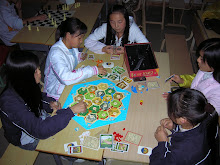
*posting test*
Testing a proxy server to see if I can get around the recent block of blogger.com by the CCP.
5.17.2009

12.16.2008
I've Moved
I will be posting everything posting everything here.
http://blog.seattlepi.nwsource.com/mychina/
My goal is to only post there from now on, but we'll see.
Sorry for any inconvenience.
Cheers!
http://blog.seattlepi.nwsource.com/mychina/
My goal is to only post there from now on, but we'll see.
Sorry for any inconvenience.
Cheers!
12.15.2008
Visiting Anshun

Bethany, Bonnie, Dustin, ZhuKui
Bonnie (Country Directory) and ZhuKui (Program Manager) visited Anshun awhile back. We had a nice hike up the mountain behind the dormitories and then around the back of the school. The back gate, a single door, opens like clothes parting in a wardrobe, revealing overturned rice paddies covered with stacks of rice stalks and women picking heads of Chinese cabbage before the frost sets in.
They visited my apartment as well. "What are those?" Bonnie asks, pointing at some disfigured, withered plants that were there when I first moved in well over a year before. "Oh, those. Well, they are... an experiment?"
She looks with curiosity at my walls, and the pathetic hangings whose sole intention of covering the bleak, white, cracking walls is only too obvious. I use one wall for hanging things sent from home, including pictures, postcards, and little notes. The wall threatens to swallow this small display, and the two dead light bulbs in my 6-bulb 'chandelier' certainly don't add to the ambiance. "Where's your bathroom?" she asks, before heading through my kitchen and through the back hallway to take a look.
"I'm ready to go," she says, "but I need to get a picture of your soap sculpture first."
Please don't ask.
She nods towards my bicycle on the way out - another pitiful thing with the seat removed for hauling loads of wood and tires clearly flat from months of disuse. I almost felt like my apartment was some kind of extension of my volunteering skill; like the disorder was a manifestation of my ability and, therefore, my teaching would also be the same in her eyes: a broken down display of ineptitude.
But I'm sure she didn't think so.
Right?
A message from Peace Corps (China Staff)
Holiday Greetings to All!
The Peace Corps Staff would like to wish all of you the very best during this holiday season. We thank you for being here, for your willingness to leave the comfort of life back in the U.S., and for the personal sacrifices that you have made to be a Volunteer in China.
It is a time for you to reflect on what you have experienced and accomplished during the time you have been here, the difference you have made in your life and the lives of your students and colleagues. Peace Corps can be exhilarating, frustrating, emotionally lifting and emotionally draining all at the same time. Our New Year's hopes and wishes for you are that you consider the amazing opportunities for you in China, savor the experience and continue to do your best for your benefit as well as those around you.
May you, your families and friends here in China and back home have a safe and pleasant holiday season.
Best wishes,
Peace Corps China Staff
The Peace Corps Staff would like to wish all of you the very best during this holiday season. We thank you for being here, for your willingness to leave the comfort of life back in the U.S., and for the personal sacrifices that you have made to be a Volunteer in China.
It is a time for you to reflect on what you have experienced and accomplished during the time you have been here, the difference you have made in your life and the lives of your students and colleagues. Peace Corps can be exhilarating, frustrating, emotionally lifting and emotionally draining all at the same time. Our New Year's hopes and wishes for you are that you consider the amazing opportunities for you in China, savor the experience and continue to do your best for your benefit as well as those around you.
May you, your families and friends here in China and back home have a safe and pleasant holiday season.
Best wishes,
Peace Corps China Staff
12.14.2008
Lecture in Zunyi
I gave a lecture about being an individualist in a collectivist society at Zunyi Medical College in Zunyi (a city famous for being the place where a series of communist revolutionary meetings were held before Mao Zedong led his troops to defeat the Guomingdang). The students were interested to learn what kinds of things made me uncomfortable in China, especially when I explained which American values contributed to that discomfort.
The following is my reflection - sent to Peace Corps as per their request.
Part 3: Site Exchange Report
Note: This form should be completed by the Volunteer who agreed to participate in the exchange and submitted to the respective Program Manager within five days of completion of the site exchange trip. Electronic submissions are highly encouraged. Copies of any relevant outputs such as lesson plans should be attached. Photos are welcomed. Thank you!
Volunteer’s Name: Dustin D. Ooley
1. What organization and/or people did you visit?
Zunyi Medical College (students of Andrew Park and Kari Jefferson)
2. What were the positive aspects of your site exchange trip?
Open dialogue regarding the difficulties of an individualist in a collectivist society. Students learned how western teachers have individual differences, even if they share the same culture, helping them to better understand which characteristics of their foreign teachers are cultural and which are personal.
The chance to better understand student perspectives based on the kind of questions they asked. Students interested in various aspects of my experience had an opportunity to learn more. The next day several students ate lunch with Andrew and me, giving them another chance to ask questions.
I did not fall off the stage.
3. Lessons Learned/Recommendations for other Volunteers?
Don’t forget to have a camera.
Plan everything – even the little things.
Speak some Chinese – they love it.
The following is my reflection - sent to Peace Corps as per their request.
Part 3: Site Exchange Report
Note: This form should be completed by the Volunteer who agreed to participate in the exchange and submitted to the respective Program Manager within five days of completion of the site exchange trip. Electronic submissions are highly encouraged. Copies of any relevant outputs such as lesson plans should be attached. Photos are welcomed. Thank you!
Volunteer’s Name: Dustin D. Ooley
1. What organization and/or people did you visit?
Zunyi Medical College (students of Andrew Park and Kari Jefferson)
2. What were the positive aspects of your site exchange trip?
Open dialogue regarding the difficulties of an individualist in a collectivist society. Students learned how western teachers have individual differences, even if they share the same culture, helping them to better understand which characteristics of their foreign teachers are cultural and which are personal.
The chance to better understand student perspectives based on the kind of questions they asked. Students interested in various aspects of my experience had an opportunity to learn more. The next day several students ate lunch with Andrew and me, giving them another chance to ask questions.
I did not fall off the stage.
3. Lessons Learned/Recommendations for other Volunteers?
Don’t forget to have a camera.
Plan everything – even the little things.
Speak some Chinese – they love it.
Little Injustices
Usually traveling is both fun and informative. Trains are the perfect place for conversation due to the family-style seating arrangement and the freedom to walk around. I have had some of my most in-depth conversations on trains, transcending the basic questions like, "How old are you?" and "How much money do you make?"
Sometimes travel can be more cumbersome. Sometimes the people are less willing to talk, due to shyness or lack of interest. Today's trip back from Zunyi was like this; I didn't say much more than "恩 (en4)," an affirmative response to the question from the train worker, "Are you going to Anshun?"
The people around me looked over my shoulder to see me reading my textbook (新使用汉语课本;五册). Even a glance in this book should be enough for a Chinese person to realize that I can speak Chinese. In fact, it's typically a surprise for people that I can read Chinese even after speaking with them for several minutes. Speaking Chinese isn't nearly as difficult as reading (or writing) it in the eyes of a typical Chinese person.
I decided to go back and grab something to eat in the dining car and I walked several cars up, passing the typical stares and furtive elbow-jostlings friends give to one another as I walk by. "外国人 (wai4guo2ren2)" they whisper, "Outside Country Person." When I request a menu at the dining car the waitress happily hands one to me while 3 other train attendants sit at a table smoking and talking quietly. The rest of the car was empty. I sat down, opened the menu, and discovered why. Basic dishes were 4 or 5 times the regular price and I asked if they had egg fried rice. 没有。
"I'll just have those instant noodles," I said, giving the waitress 5 yuan and looking for the boiling water.
"It's outside," she said.
"Ok - I can just eat in here, right?" I said to be polite, not really to ask for permission - I was planning on coming back.
The waitress looked down at one of the train attendants, who was shaking her head.
"You're right, it's pretty crowded in here," I responded without thinking much. "What a strange rule," I added under my breath (again in Chinese). Just because I didn't order the expensive dishes they would let me sit in the dining room.
"Wait," another train attendant at the same table shouted to me as I was disappearing down the dining car corridor, "sit down - it's no problem." I had sufficiently upset them with my snide comments, and that was exactly the result I had intended.
I filled up my bowl of instant noodles at the boiling water container between cars and continued back to my seat through the same sea of whispers and stares. I sat down and hunched over my noodles, slurping them down in several minutes.
When I left the train station after arriving in Anshun, I looked for a cab driver and asked how much to go to the college. "20," he said, and I continued on, shaking my head. "Let him go for 15, he's a teacher at the college," another cab driver said. The first driver yelled after me and said that 15 would be fine, so I turned and got in. Before we left the train station he shuffled a family of four in the back of the cab while I looked at him strangely. "Don't worry, it's on the way," he said. I was still skeptical.
We turned off the basic route back to the college, but not long after he let the family out and we continued on to the college. The family paid 5 yuan, so it was easy to do the math. That meant I owed 10 yuan now. Right?
There's a little trick the cab drivers like to pull in Guizhou. It's happened to me a few times in Anshun and Liupanshui. Drivers will pick up multiple people and force them to pay separate fares, rather than allowing them to share a cab. If you don't know the person, chances are you will have to pay a separate fare.
Once when coming back from a trip to Guiyang something similar happened. I got in after agreeing to 15 and the cabbie said we should wait for students who were also going to the college. "Wait or not, it doesn't matter to me," I said, "it's the same price either way." He looked hurt. And then I helped him recruit a student who got in the cab with us. "Hey, it's 5 yuan to go to the college," he said to the student. "No, it isn't," I cut him off. "Don't listen to him - it's only 15 and I'll take care of it." He looked back at me, "give me something!" he said desperately. "You will get 17, and that's all," I responded, being more generous than I should have been.
And so we dropped the family off and headed back to the campus. The driver tried to make small-talk but I didn't say much but cursory responses. I wasn't excited about getting to know him if I was going to have to shatter his illusion that he was going to get 20 yuan from the combined fares of the family and me. He was still getting 15.
And when we got to my apartment I handed him a 10. He looked confused and then cleared up the misunderstanding by explaining that it was 15. "Yeah, I know - that family gave 5 and I just gave you 10."
"That's not part of the fare," he said angrily, "you can't do that - impossible."
"Pay 20? THAT'S impossible," I responded, and began to get out of the cab.
He muttered a string of dialect that was followed by “老外 (lao3wai4)" another less polite word meaning foreigner. I'm glad I didn't understand everything he said, and I was happy that he didn't get away with double-charging. Many people just fold and give them money (even volunteers). I walked back up the 5 flights to my apartment, not doing much for China during my trip home - but certainly preserving some of my own values for the day.
Sometimes travel can be more cumbersome. Sometimes the people are less willing to talk, due to shyness or lack of interest. Today's trip back from Zunyi was like this; I didn't say much more than "恩 (en4)," an affirmative response to the question from the train worker, "Are you going to Anshun?"
The people around me looked over my shoulder to see me reading my textbook (新使用汉语课本;五册). Even a glance in this book should be enough for a Chinese person to realize that I can speak Chinese. In fact, it's typically a surprise for people that I can read Chinese even after speaking with them for several minutes. Speaking Chinese isn't nearly as difficult as reading (or writing) it in the eyes of a typical Chinese person.
I decided to go back and grab something to eat in the dining car and I walked several cars up, passing the typical stares and furtive elbow-jostlings friends give to one another as I walk by. "外国人 (wai4guo2ren2)" they whisper, "Outside Country Person." When I request a menu at the dining car the waitress happily hands one to me while 3 other train attendants sit at a table smoking and talking quietly. The rest of the car was empty. I sat down, opened the menu, and discovered why. Basic dishes were 4 or 5 times the regular price and I asked if they had egg fried rice. 没有。
"I'll just have those instant noodles," I said, giving the waitress 5 yuan and looking for the boiling water.
"It's outside," she said.
"Ok - I can just eat in here, right?" I said to be polite, not really to ask for permission - I was planning on coming back.
The waitress looked down at one of the train attendants, who was shaking her head.
"You're right, it's pretty crowded in here," I responded without thinking much. "What a strange rule," I added under my breath (again in Chinese). Just because I didn't order the expensive dishes they would let me sit in the dining room.
"Wait," another train attendant at the same table shouted to me as I was disappearing down the dining car corridor, "sit down - it's no problem." I had sufficiently upset them with my snide comments, and that was exactly the result I had intended.
I filled up my bowl of instant noodles at the boiling water container between cars and continued back to my seat through the same sea of whispers and stares. I sat down and hunched over my noodles, slurping them down in several minutes.
When I left the train station after arriving in Anshun, I looked for a cab driver and asked how much to go to the college. "20," he said, and I continued on, shaking my head. "Let him go for 15, he's a teacher at the college," another cab driver said. The first driver yelled after me and said that 15 would be fine, so I turned and got in. Before we left the train station he shuffled a family of four in the back of the cab while I looked at him strangely. "Don't worry, it's on the way," he said. I was still skeptical.
We turned off the basic route back to the college, but not long after he let the family out and we continued on to the college. The family paid 5 yuan, so it was easy to do the math. That meant I owed 10 yuan now. Right?
There's a little trick the cab drivers like to pull in Guizhou. It's happened to me a few times in Anshun and Liupanshui. Drivers will pick up multiple people and force them to pay separate fares, rather than allowing them to share a cab. If you don't know the person, chances are you will have to pay a separate fare.
Once when coming back from a trip to Guiyang something similar happened. I got in after agreeing to 15 and the cabbie said we should wait for students who were also going to the college. "Wait or not, it doesn't matter to me," I said, "it's the same price either way." He looked hurt. And then I helped him recruit a student who got in the cab with us. "Hey, it's 5 yuan to go to the college," he said to the student. "No, it isn't," I cut him off. "Don't listen to him - it's only 15 and I'll take care of it." He looked back at me, "give me something!" he said desperately. "You will get 17, and that's all," I responded, being more generous than I should have been.
And so we dropped the family off and headed back to the campus. The driver tried to make small-talk but I didn't say much but cursory responses. I wasn't excited about getting to know him if I was going to have to shatter his illusion that he was going to get 20 yuan from the combined fares of the family and me. He was still getting 15.
And when we got to my apartment I handed him a 10. He looked confused and then cleared up the misunderstanding by explaining that it was 15. "Yeah, I know - that family gave 5 and I just gave you 10."
"That's not part of the fare," he said angrily, "you can't do that - impossible."
"Pay 20? THAT'S impossible," I responded, and began to get out of the cab.
He muttered a string of dialect that was followed by “老外 (lao3wai4)" another less polite word meaning foreigner. I'm glad I didn't understand everything he said, and I was happy that he didn't get away with double-charging. Many people just fold and give them money (even volunteers). I walked back up the 5 flights to my apartment, not doing much for China during my trip home - but certainly preserving some of my own values for the day.
12.12.2008
Why we are here...?
In a recent post, Phil has pointed to the extensive history of human rights violations in China, something that continues today. These violations include unlawful imprisonment and torture, which are condemned by both the Universal Declaration of Human Rights and the Chinese Constitution. The issue remains very serious, despite the fact that Chinese people are freer now than they have ever been in their long, continuous 5000 years of history.
Of course, Phil would argue that the relative merits of the current government do not outweigh the continued unlawful imprisonment of critical, popular bloggers who, as we speak, are languishing in prisons for the words they wrote.
As an American I believe fiercely in my right to freedom of speech and freedom to make changes. What I’ve learned since coming to China, however, is that this is not my place. There are many reasons for this, and I would like to elaborate. Firstly, I am not currently under American law, but Chinese law. Although freedom of speech is guaranteed by the Chinese Constitution, another clause protecting the current government trumps that clause. Those who say that China doesn’t follow its own laws needs to analyze this problem and work to change it rather than merely making this statement.
Secondly, I am a Peace Corps Volunteer, sent to China by U.S. tax dollars and, though I am not a government employee, I have been assigned with 3 goals to accomplish as a volunteer.
The goals are (1) to help the country meet its need for trained people (which we do by teaching English students who will go on to become English teachers); (2) share American culture with the host country; and (3) learn about the culture of the host country in order to share that with Americans upon return to America.
According to these goals, I find little or no incentive to be outspoken about my beliefs regarding the government (though, in the past, I have certainly posted my share of information that could probably be used to gather a general idea of my feelings). Finding a reason to be more open with Chinese people about my feelings regarding the government would not help me to better accomplish my goals – even if you argue that this open, honest dialogue is indelibly a part of American culture and, therefore, should be a part of goal number 2. For me, however, the link is too tenuous for serious consideration.
Another reason I don’t rush into a healthy criticism of the government is related to how much the issues have been twisted by both sides. Most Americans still think the Embassy bombing in Yugoslavia was unintentional, or they have forgotten about it entirely. Chinese scholars contend that Tibet has been part of China throughout the Ming Dynasty, while scholars just about everywhere else argue that it’s untrue. Young, ultra-liberal westerners jump on the “free Tibet” bandwagon without understanding the arguments made by China. The same is true of other issues that rarely find themselves brought up in conversations in my part of China.
Again, my feelings on these issues are strong, and I have a large supply of emotion that will likely pour out when I return to America. Perhaps one day I will look back and wish I said more, expressed my opinions more freely, and tried to make some political change. But then, would I be any different than those wishing to spread their faith?
I enjoy Phil’s blog immensely and frankly, I’m happy he is taking a different stance than me. It gives us something to discuss.
Peace,
-d
Of course, Phil would argue that the relative merits of the current government do not outweigh the continued unlawful imprisonment of critical, popular bloggers who, as we speak, are languishing in prisons for the words they wrote.
As an American I believe fiercely in my right to freedom of speech and freedom to make changes. What I’ve learned since coming to China, however, is that this is not my place. There are many reasons for this, and I would like to elaborate. Firstly, I am not currently under American law, but Chinese law. Although freedom of speech is guaranteed by the Chinese Constitution, another clause protecting the current government trumps that clause. Those who say that China doesn’t follow its own laws needs to analyze this problem and work to change it rather than merely making this statement.
Secondly, I am a Peace Corps Volunteer, sent to China by U.S. tax dollars and, though I am not a government employee, I have been assigned with 3 goals to accomplish as a volunteer.
The goals are (1) to help the country meet its need for trained people (which we do by teaching English students who will go on to become English teachers); (2) share American culture with the host country; and (3) learn about the culture of the host country in order to share that with Americans upon return to America.
According to these goals, I find little or no incentive to be outspoken about my beliefs regarding the government (though, in the past, I have certainly posted my share of information that could probably be used to gather a general idea of my feelings). Finding a reason to be more open with Chinese people about my feelings regarding the government would not help me to better accomplish my goals – even if you argue that this open, honest dialogue is indelibly a part of American culture and, therefore, should be a part of goal number 2. For me, however, the link is too tenuous for serious consideration.
Another reason I don’t rush into a healthy criticism of the government is related to how much the issues have been twisted by both sides. Most Americans still think the Embassy bombing in Yugoslavia was unintentional, or they have forgotten about it entirely. Chinese scholars contend that Tibet has been part of China throughout the Ming Dynasty, while scholars just about everywhere else argue that it’s untrue. Young, ultra-liberal westerners jump on the “free Tibet” bandwagon without understanding the arguments made by China. The same is true of other issues that rarely find themselves brought up in conversations in my part of China.
Again, my feelings on these issues are strong, and I have a large supply of emotion that will likely pour out when I return to America. Perhaps one day I will look back and wish I said more, expressed my opinions more freely, and tried to make some political change. But then, would I be any different than those wishing to spread their faith?
I enjoy Phil’s blog immensely and frankly, I’m happy he is taking a different stance than me. It gives us something to discuss.
Peace,
-d
12.11.2008
Competition or Cooperation?
(taken from
THE VALUES AMERICANS LIVE BY
by L. Robert Kohls)
The following is one of 13 values outlined by the Washington International Center in 1984. It was meant to be a guide to help foreign visitors better understand Americans, and it has been valuable in helping me to be more aware of my own values while I live in a country that is so different.
"7. Competition and Free Enterprise
Americans believe that competition brings out the best in any individual. They assert that it challenges or forces each person to produce the very best that is humanly possible. Consequently, the foreign visitor will see competition being fostered in the American home and in the American classroom, even on the youngest age levels. Very young children, for instance, are encouraged to answer questions for which their classmates do not know the answers.
You may find the competitive value disagreeable, especially if you come from a society [that] promotes cooperation rather than competition. But many U.S. Peace Corps volunteers teaching in Third World countries found the lack of competitiveness in a classroom situation equally distressing. They soon learned that what they had thought to be one of the universal human characteristics represented only a peculiarly American (or Western) value.
Americans feel very strongly that a highly competitive economy will bring out the best in its people and ultimately, that the society which fosters competition will progress most rapidly. If you look for it, you will see evidence in all areas -even in fields as diverse as medicine, the arts, education, and sports -that free enterprise is the approach most often preferred in America."
In the same spirit of competition Phil and I have begun an informal battle of the blogs. First prize is merely the chance to avoid the shame of being second place. Our battle will be fought both tactically and strategically, with each side employing a large staff who will carry out such tasks as monitoring the opponent’s blog or analyzing results from the highly scientific surveys included on the task-bar.
Recently our people sent his people an envelope wishing him luck. The envelope was laced with a virus whose only side-effect is an extreme reluctance to post blogs. We will inform you of updates as we receive them.
The Ooley campaign needs your help, and accepts suggestions on techniques, tactics, or strategies 24-hours-a-day. If you have an idea for a story, please submit it asap via dustinooleyinchina@gmail.com or click the comments link below for anonymity (really – you can suggest anything!).
Cheers!
THE VALUES AMERICANS LIVE BY
by L. Robert Kohls)
The following is one of 13 values outlined by the Washington International Center in 1984. It was meant to be a guide to help foreign visitors better understand Americans, and it has been valuable in helping me to be more aware of my own values while I live in a country that is so different.
"7. Competition and Free Enterprise
Americans believe that competition brings out the best in any individual. They assert that it challenges or forces each person to produce the very best that is humanly possible. Consequently, the foreign visitor will see competition being fostered in the American home and in the American classroom, even on the youngest age levels. Very young children, for instance, are encouraged to answer questions for which their classmates do not know the answers.
You may find the competitive value disagreeable, especially if you come from a society [that] promotes cooperation rather than competition. But many U.S. Peace Corps volunteers teaching in Third World countries found the lack of competitiveness in a classroom situation equally distressing. They soon learned that what they had thought to be one of the universal human characteristics represented only a peculiarly American (or Western) value.
Americans feel very strongly that a highly competitive economy will bring out the best in its people and ultimately, that the society which fosters competition will progress most rapidly. If you look for it, you will see evidence in all areas -even in fields as diverse as medicine, the arts, education, and sports -that free enterprise is the approach most often preferred in America."
In the same spirit of competition Phil and I have begun an informal battle of the blogs. First prize is merely the chance to avoid the shame of being second place. Our battle will be fought both tactically and strategically, with each side employing a large staff who will carry out such tasks as monitoring the opponent’s blog or analyzing results from the highly scientific surveys included on the task-bar.
Recently our people sent his people an envelope wishing him luck. The envelope was laced with a virus whose only side-effect is an extreme reluctance to post blogs. We will inform you of updates as we receive them.
The Ooley campaign needs your help, and accepts suggestions on techniques, tactics, or strategies 24-hours-a-day. If you have an idea for a story, please submit it asap via dustinooleyinchina@gmail.com or click the comments link below for anonymity (really – you can suggest anything!).
Cheers!
12.10.2008
Hot Seat

In our Oral English class we tried an activity that I found on the Internet at Dave's ESL Cafe. Each student volunteered to sit in the hot seat (in the background misspelled as "hotseat") and be subjected to 5 questions by their classmates. Whether or not they had to answer the question I didn't say. As with many activities we do, I don't like to impose too many rules. Waiting to see how far it goes is usually more interesting, and I can always move things past awkward moments or even cancel the activity completely.
It took the students a few questions before they got the idea. When they really got going there was certainly a pattern to their questions.
What I found most interesting about the activity was how much their questions revealed their own culture and the individual who was in the hot seat. Questions that were often repeated:
"When will you get married?" (by far the most common).
"What kind of girls/boys do you find attractive?"
"What do you think of the girls/boys in our class?"
The last question is telling because it shows just how much students who know one another very well can still keep some of their true feelings hidden away. Overall their questions were about relationships - a reflection of a long history of Confucianism (don't tell them, though - they feel that they are far more modern than their parents).
I learned a lot about individuals but, more importantly, how the students in the class felt about certain people. Some of the questions were as follows:
"Do you think you're so cool?" (the class thinks he acts too cool).
"Do you have a bf? What do you like about boys?" etc. (she is very nervous and shy around boys).
"Is your duty to your family or your boyfriend?" (A girl who, in 2 years, will have to decide whether she returns home to her family or to the province from which her boyfriend came). Her answer, by the way, was an incredibly well-spoken balance that led to class applause.
12.09.2008
A Trip to the Post Office

Yesterday, on the way to the Post Office I saw this sign. I understood some of the words and the general meaning, but the exact meaning was elusive. I looked at my electronic dictionary. It's something like, "Societal order - everyone does their duty." These signs are nothing new in China, and were used with great success by Mao to convince people of... whatever. Capitalism is bad? Make a sign about it. It's one reason people will have certain convictions that might be without thought. They were told what to believe and then they create justification after the fact. It's similar to McCarthyism in the 1950s (and yes, we too had some pretty heavy propaganda in America at that time). In front of the sign are workers waiting for odd jobs (and playing cards in the meantime).

I mailed something to my parents.

Then I returned home to find these older men playing "Beat the Landlord," one of about 5 games that are very popular in China. This game is a combination of Skill and Luck, like most games the Chinese seem to favor (majiang, chess, and go are others). But like any game, money must be involved. The stakes were high (5 yuan per round), and the men slammed their cards down with an Alpha-confidence accompanied by a loud grunt.

I dropped my things off at my apartment and headed to the office for my office hours, meeting some students along the way who were cleaning the campus. If you didn't know already, that's how it works here. The classroom belongs to the students, so it's their job to keep it clean. The campus belongs to the students as well, who clean it on rotation. Each week the entire campus is cleaned by students, not a hired cleaning crew.
One of the students didn't understand why I was taking their photo for such a mundane event and I explained. "Oh," he said, "they wouldn't believe that we do this, so you are showing them."
"Exactly."
Chinese Names
One interesting aspect of teaching students in rural Guizhou is that very few people enter the college English department with an English name. It falls on the foreign teacher to provide the students with a name - a task that I learned to pass on this year. Sure I had the opportunity to give names to students who are now my friends, making their names more special. But the process was dreadful.
"Sandy... what does it mean?" one student asks.
"Ummm..." I reply, dumbfounded. Actually, unless you ask me what my own name means, I have absolutely no idea about name origins or meanings. And I suspect, to some extent, neither does anyone else in America.
The back-story for Chinese names could probably go on forever (almost), but there are some general differences between Chinese and English names.
My brother's name in Chinese is 艾论,which probably means something like "handsome talker,"but, more importantly, phonetically represents my brother's name using Chinese characters (AiLun - Aron). It's not a perfect phonetic translation because there are many sounds in Chinese that don't exist in English and vice versa. This is the main reason people have accents: they approximate sounds they cannot say by using something close in their own language (Hence: Flied Lice).
So I'm standing there after class and the students have a barrage of questions: "Which English name means 'flower?'"
"Which English name sounds strong and also means clever?"
"What does 'Garth' mean?"
Again I respond:
"Ummm..."
To make it simple I will put it like this: Chinese names are much easier to understand because they are like Native American names. I don't mean that they are names about nature, but that they have a strong relationship with words that are used in everyday speech. An example would be the Native American name, "Running Bear." If we break these apart they will but used in everyday speech. 'Running' and 'bear'.
It's a little more difficult in English. For example: David.
Of course we have 'Dav,' which means ?, and 'id,' which is part of the subconscious.
You see my point? They are words that are derived from other languages and different traditions, rather than one long, continuous history. Sure we could trace 'David' back to Hebrew (and maybe farther than that), and we might even find the words represented by the name. But today it's not so easy - especially when the name is not your own.
Chinese names are broken into two parts: Family name and Given name (in that order). The family name is one character. The 3 most common Chinese family names are: 王 Wang (wong), 李 Li (lee), and 张 Zhang (jong). Tracing these names is probably similar to tracing English surnames, as these names are often related to where someone is from (I think).
Given names are simple, I think. Here are a couple names (family name included)
张美丽 (Zhang Beautiful)
王云超 (Wang Exceeds the Clouds)
The given names can often be broken apart to have meaning (云 means cloud), so it's no surprise when a Chinese student mistakenly takes us for name experts.
My Chinese name was taken from the phonetics of my surname, Ooley. In Chinese is is pronounced /ou lei/ and written 欧雷. My new "family" name is 欧,which means 'Europe,' and my new "given" name is 雷, or, 'thunder.' Though people don't typically combine their family name with their given name to understand the meaning, doing so with my name yields, "Thunder over Europe."
Russia beware.
"Sandy... what does it mean?" one student asks.
"Ummm..." I reply, dumbfounded. Actually, unless you ask me what my own name means, I have absolutely no idea about name origins or meanings. And I suspect, to some extent, neither does anyone else in America.
The back-story for Chinese names could probably go on forever (almost), but there are some general differences between Chinese and English names.
My brother's name in Chinese is 艾论,which probably means something like "handsome talker,"but, more importantly, phonetically represents my brother's name using Chinese characters (AiLun - Aron). It's not a perfect phonetic translation because there are many sounds in Chinese that don't exist in English and vice versa. This is the main reason people have accents: they approximate sounds they cannot say by using something close in their own language (Hence: Flied Lice).
So I'm standing there after class and the students have a barrage of questions: "Which English name means 'flower?'"
"Which English name sounds strong and also means clever?"
"What does 'Garth' mean?"
Again I respond:
"Ummm..."
To make it simple I will put it like this: Chinese names are much easier to understand because they are like Native American names. I don't mean that they are names about nature, but that they have a strong relationship with words that are used in everyday speech. An example would be the Native American name, "Running Bear." If we break these apart they will but used in everyday speech. 'Running' and 'bear'.
It's a little more difficult in English. For example: David.
Of course we have 'Dav,' which means ?, and 'id,' which is part of the subconscious.
You see my point? They are words that are derived from other languages and different traditions, rather than one long, continuous history. Sure we could trace 'David' back to Hebrew (and maybe farther than that), and we might even find the words represented by the name. But today it's not so easy - especially when the name is not your own.
Chinese names are broken into two parts: Family name and Given name (in that order). The family name is one character. The 3 most common Chinese family names are: 王 Wang (wong), 李 Li (lee), and 张 Zhang (jong). Tracing these names is probably similar to tracing English surnames, as these names are often related to where someone is from (I think).
Given names are simple, I think. Here are a couple names (family name included)
张美丽 (Zhang Beautiful)
王云超 (Wang Exceeds the Clouds)
The given names can often be broken apart to have meaning (云 means cloud), so it's no surprise when a Chinese student mistakenly takes us for name experts.
My Chinese name was taken from the phonetics of my surname, Ooley. In Chinese is is pronounced /ou lei/ and written 欧雷. My new "family" name is 欧,which means 'Europe,' and my new "given" name is 雷, or, 'thunder.' Though people don't typically combine their family name with their given name to understand the meaning, doing so with my name yields, "Thunder over Europe."
Russia beware.
Dreams from My Obama
Every night I dream of Obama now. Most of the dreams are unrealistic scenes from home, where I hang out with Barack’s family. “Do you want a bagel?” I ask Barack as he enters the kitchen with the morning newspaper.
“Sure – would you toast it for me?” he replies.
“No problem.”
I still remember where I was when Obama announced, live, his intention to run for President in 2007. I was on the treadmill at the gym, and I scrambled to switch my headphones from my iPod to the miniature television attached to the machine. Part of the reason I remember so well is that I almost went off the back of the treadmill when switching the headphones.
It wasn’t long after that I began analyzing his voting record, scouring his history through Internet leads, and trying to learn more about the man who would eventually become our President. When he came to Seattle I bought a ticket and listened intently to a well-delivered, though policy-thin, speech. And to be honest, though I was likely to vote for Barack Obama, I hadn’t ruled out voting for Hillary Clinton.
It was about this time that something was happening in Washington D.C. that would change the next two years of my life. My Peace Corps application was finally complete and approved, and it had been passed on to the Peace Corps China official. I got a call and eventually accepted the invitation to serve in the People’s Republic of China.
The volunteers were much like my colleagues in Seattle: most of them were liberal, and most clung to some kind of idealism. We would have intense discussions about the relative merits of Hillary Clinton and Barack Obama, but favor eventually shifted to Obama. During these conversations you could always pick out the Republican: the quiet one on the other side of the room. Not long after, Obama won the nomination, and later, the election.
That’s when the dreams began, I think. You see, I’d always harbored some kind of grandiose idea that I would be a part of his cabinet. I’m 27, I have some wordly experience, and I have a decent education. Though I have just described a large portion of the U.S. population, I still felt that I was different somehow – worthy of making those important decisions or, at least, toasting a bagel just right.
Since the dreams began, every morning I wake up to disappointment. I am not in the White House, looking over Obama’s schedule and making last-minute changes, nor am I furiously typing a last-minute article that outlines the subtleties of U.S. – China misunderstandings at a societal level (to be stamped and approved by you-know-who before it is published under his name).
Throughout the campaign I badgered the people in his country-wide election offices, offering to help with the campaign. “Even though I am in China, I could still do something… right?” I never heard back.
Part of my thinking was encouraged by the constant emails from the Obama campaign. With the ability to insert my name in the mass email, the Obama people made me feel special - like they were sending me an important email. It sounded to me like, "Listen, Dustin, we couldn't reach you by cell phone. Would you ask the other volunteers which states they're from? We also need some information about the rural Chinese perspective - what exactly do rural Chinese have to say about Obama? Thanks."
But, of course, these emails were more like, "Dustin - if you give 50 dollars today, we'll send you a t-shirt."
So I wake up and here I am: China. I am thriving here now, but getting caught up in this grandiose thinking always leads to disappointment. During the last days of the general campaign, there was an email that said giving a donation now would automatically enter you in a drawing to have dinner with Obama. I immediately sent 20 dollars, about 1 percent of my annual income. The response was a phone call from America, asking if I could help do some last-minute doorbelling. “Sorry,” I said, obviously upset. “I’m in China.”
I haven’t thought of any solutions to this constant dreaming of Obama. How does one control one’s own dreams?
I guess, for now, I’ll have to make the most of my Sunday afternoons with the Obama family. “Come on,” I say to his daughters, “let’s go grab some ice-cream.” Michelle and Barack look on with smiling faces, not thinking that it’s weird at all.
“Sure – would you toast it for me?” he replies.
“No problem.”
I still remember where I was when Obama announced, live, his intention to run for President in 2007. I was on the treadmill at the gym, and I scrambled to switch my headphones from my iPod to the miniature television attached to the machine. Part of the reason I remember so well is that I almost went off the back of the treadmill when switching the headphones.
It wasn’t long after that I began analyzing his voting record, scouring his history through Internet leads, and trying to learn more about the man who would eventually become our President. When he came to Seattle I bought a ticket and listened intently to a well-delivered, though policy-thin, speech. And to be honest, though I was likely to vote for Barack Obama, I hadn’t ruled out voting for Hillary Clinton.
It was about this time that something was happening in Washington D.C. that would change the next two years of my life. My Peace Corps application was finally complete and approved, and it had been passed on to the Peace Corps China official. I got a call and eventually accepted the invitation to serve in the People’s Republic of China.
The volunteers were much like my colleagues in Seattle: most of them were liberal, and most clung to some kind of idealism. We would have intense discussions about the relative merits of Hillary Clinton and Barack Obama, but favor eventually shifted to Obama. During these conversations you could always pick out the Republican: the quiet one on the other side of the room. Not long after, Obama won the nomination, and later, the election.
That’s when the dreams began, I think. You see, I’d always harbored some kind of grandiose idea that I would be a part of his cabinet. I’m 27, I have some wordly experience, and I have a decent education. Though I have just described a large portion of the U.S. population, I still felt that I was different somehow – worthy of making those important decisions or, at least, toasting a bagel just right.
Since the dreams began, every morning I wake up to disappointment. I am not in the White House, looking over Obama’s schedule and making last-minute changes, nor am I furiously typing a last-minute article that outlines the subtleties of U.S. – China misunderstandings at a societal level (to be stamped and approved by you-know-who before it is published under his name).
Throughout the campaign I badgered the people in his country-wide election offices, offering to help with the campaign. “Even though I am in China, I could still do something… right?” I never heard back.
Part of my thinking was encouraged by the constant emails from the Obama campaign. With the ability to insert my name in the mass email, the Obama people made me feel special - like they were sending me an important email. It sounded to me like, "Listen, Dustin, we couldn't reach you by cell phone. Would you ask the other volunteers which states they're from? We also need some information about the rural Chinese perspective - what exactly do rural Chinese have to say about Obama? Thanks."
But, of course, these emails were more like, "Dustin - if you give 50 dollars today, we'll send you a t-shirt."
So I wake up and here I am: China. I am thriving here now, but getting caught up in this grandiose thinking always leads to disappointment. During the last days of the general campaign, there was an email that said giving a donation now would automatically enter you in a drawing to have dinner with Obama. I immediately sent 20 dollars, about 1 percent of my annual income. The response was a phone call from America, asking if I could help do some last-minute doorbelling. “Sorry,” I said, obviously upset. “I’m in China.”
I haven’t thought of any solutions to this constant dreaming of Obama. How does one control one’s own dreams?
I guess, for now, I’ll have to make the most of my Sunday afternoons with the Obama family. “Come on,” I say to his daughters, “let’s go grab some ice-cream.” Michelle and Barack look on with smiling faces, not thinking that it’s weird at all.
12.08.2008
Peace Corps China Blogosphere

The blogosphere remains quite small amongst volunteers, but I wanted to point out an interesting blog by Phil Razem, a Chongqing volunteer. Phil's school has around 55,000 students compared with my 5,000 and he lives in a city with millions and millions of people (compared with around 300,000).
Phil's blog is written with a different style and he has some clear goals related to informing people about cultural differences. I have enjoyed reading his blog, if only to get a different perspective of life and teaching in China.
Phil (the handsome guy you see running on the Great Wall in the above picture) and I have an ongoing blog battle where we see who will post more often (don't tell him - he doesn't know about this yet). It's hardly fair, as the content of his blogs is rich and offers links to other places. I am lucky to write enough letters to make up a word, let alone a sentence or paragraph.
Check it out - I think you'll like it.
***UPDATE***
Phil has accepted the challenge.
Power Out

One would think I'd grown tired of talking about power outages. I'm relatively lucky, considering I only lose power about once a month during the winter. I'm not altogether unprepared, either. I have stockpiles of candles and matches, a host of battery powered electronics, and shelves of books.
It's not a problem of heat, either. I'm accustomed to 50 degrees inside - just wear warm clothes.
Part of the issue is that it remains unexpected. From a certain perspective it's a gift. I have to be more creative when planning out my day. In the morning I can only wash my face and feet - the water's too cold for a complete shower. The water for my coffee is heated in a stir-fry pan over my gas heater. I can even blast music in my apartment with my iPod's accompanying speakers (5-hour battery life!).
This last outage was only 24 hours. I can't explain the strange feeling when walking back to my apartment building, looking up to my 5th floor window, and seeing the lights on inside.
The moment the power goes out I emit a flicker of panic. Immediately I categorize the location of candles, matches, a thick winter coat and the Nepalese "Everest" hat to keep my head warm. These are easy to find - and when I settle down to study Chinese the panic subsides. Especially when I realize that I'm perfectly warm and comfortable studying by candlelight.
12.05.2008
Debates


When I first planned to have a debate in class, I was a little worried about the topic. I knew there were things that were controversial, but whether they were appropriate topics or taboo was uncertain. This problem was solved by asking my students to pick a topic. After a painful 15 minute brainstorming session, the topic was decided by the class: "Which is more important - process or result?"
"Really?" I asked them. "You can talk about that for an hour?" I hung my head as I erased death penalty and abortion from the blackboard - two topics that are sure to ignite fiery debate (especially in a college classroom).
So I was skeptical. Who wouldn't be? Process vs. Result?
It was easily one of my best classes. The students were brilliant and used very creative debating techniques, such as asking the opponents a question and attacking the logic of their answer. Only one ad-hom was used, and I wrote it on the board as an example to prevent it from continuing.
One of my favorite exchanges was between a young man and woman:
Young man: I know myself, so I know that's not true for me.
Young woman: How can you know yourself? You say...
Young man: [cutting her off] I know myself because I am myself!
The energy during the debate was exceeded only by the decompression afterward. The students spoke together in small groups for around 15 minutes about the debate. I found myself staring with awe as the students ran the class. I was unnecessary.
"Finally," I thought, after fighting the notion of the teacher-centered classroom for over a year. "They're getting it."
On Arrogance
Since coming to China I have become a different person. Although there are many factors that contributed to the changes, one of the most distinct was my need to look at things differently. This resulted in a need to be more hesitant about forming opinions. It has also led to intense reflection and contemplation. Even if I know little about this deep culture and its people, I am honest with myself (and with all of you). Honest reflection and slowing judgment have helped me to adapt in a culture where a ‘no’ might mean ‘maybe’ or a ‘yes’ might really be a ‘no way.’
During my first year, if there was frustration aside from student propensity to be indirect, it would be the lack of praise. I’m fairly average, so I don’t expect people to shower me with undeserved praise. In fact, I don’t think praise should be given unless it is earned fairly through hard work or unique talent. This talk about praise likely seems a little strange. I mean, really, what’s the big deal?
Let me ask another question: Can you imagine what life would be like with no praise? Mark Twain once said that he could live a month on a good compliment, but how long do we go in our daily lives without receiving some kind of reinforcement for the little and big things that we do? What if I were to tell you I have been generally “praised” but students fewer than 5 times since arriving in China?
Part of this is language, but most of it is cultural. The students have no idea how much our culture is based on a certain level of genuine praise, probably because they are so focused on doing their duty. That’s what I am doing, in their eyes: my duty. If I fulfill that duty, that is its own reward – right?
Triandis (1995) says that
“[Individualists] have an unusually good opinion of themselves and have a need to express their high self-esteem. Their apparent arrogance is a reflection of the culture.”
I think we have a need to be recognized for what we do, even if that recognition comes in the form of only a few kind words.
I didn't much think of this issue until I tried to think of how my students saw me as a teacher. Did they like me? Did they enjoy my class? I had almost no idea.
When studying Chinese with my students last year, we came across the word 傲慢,which translates as “haughty,” or “arrogant.” I jokingly said, “有时我一点傲慢,”or, “Sometimes I am a bit arrogant.” One of my students immediately replied in English, “Yes, you are,” with a tone of sincerity and a laugh that was a little too uncomfortable to overlook. She was serious.
I have often wondered what goes through the students’ brains in my classes and what they think of my teaching. This vague image has changed very little since I first arrived. My cloudy understanding of student perception is also tied to the differences in language and culture.
The small amount of information I have about my students is through a filtered network of gossip that began after I gave a lecture about Special Education in America. Students began to talk about how I taught young children with behavior disabilities in America, and that, therefore, I taught my Chinese students in the same way. The viciousness and unrelenting force of rumors like these make China a dangerous place to make mistakes. Say one bad word in class and you like to swear. Make one mistake and you are incompetent. Once again ‘face’ rears its ugly…head?
I never tried to look down on my students. Asserting that my students and I were the same, separated by culture, I found a place for my thoughts to grow. But the daily grind of English classes leaves an interminable trail of broken sentence structures, forgotten grammar, over generalized Chinglish, and improperly memorized proverbs that leave them sounding like a kindergarten student trapped in a young adult’s body.
I don’t doubt that I have seemed arrogant to them. Nor do I doubt that an independent American observer would give me a long list of small things that I do to slightly alienate or damage relationships with my students. My reasons for accepting that these conditions exist is not because I can think back and remember any, but because listening to broken, poor English day after day changes your perceptions about people. I never did this consciously, nor do I know the extent of my failure to treat people as equals.
Mr. Yang said something in an interview that made me reflect on my own battle against the dangerous notion of superiority:
“I don’t know how to put it. Sometimes I’m very modest. Sometimes I’m so proud – I think I’m the only intelligent guy in this department. That’s stupid, I know! The important lesson is that you may think you are very intelligent, but sometimes people around you are more intelligent than you. The only reason you find yourself intelligent is that you didn’t even cast your eyes on them – you didn’t pay attention to them.”
Though I am not much wiser since coming to China, I am certainly more careful about certain things. Too many times I have cared too much what others think of my classes or me. There is a healthy level of forgetting and moving on that everyone needs to foster when they live here. It’s a lot like getting a sense of humor, and just as painful at first.
When I look back on this experience in the future, and reflect how it has changed me, the Chinese lessons, culture shocks, failures, and successes will not compare with this new longing for honest reflection.
Triandis, H.C. (1995). Individualism and Collectivism (p.158). Westview Press: Boulder.
During my first year, if there was frustration aside from student propensity to be indirect, it would be the lack of praise. I’m fairly average, so I don’t expect people to shower me with undeserved praise. In fact, I don’t think praise should be given unless it is earned fairly through hard work or unique talent. This talk about praise likely seems a little strange. I mean, really, what’s the big deal?
Let me ask another question: Can you imagine what life would be like with no praise? Mark Twain once said that he could live a month on a good compliment, but how long do we go in our daily lives without receiving some kind of reinforcement for the little and big things that we do? What if I were to tell you I have been generally “praised” but students fewer than 5 times since arriving in China?
Part of this is language, but most of it is cultural. The students have no idea how much our culture is based on a certain level of genuine praise, probably because they are so focused on doing their duty. That’s what I am doing, in their eyes: my duty. If I fulfill that duty, that is its own reward – right?
Triandis (1995) says that
“[Individualists] have an unusually good opinion of themselves and have a need to express their high self-esteem. Their apparent arrogance is a reflection of the culture.”
I think we have a need to be recognized for what we do, even if that recognition comes in the form of only a few kind words.
I didn't much think of this issue until I tried to think of how my students saw me as a teacher. Did they like me? Did they enjoy my class? I had almost no idea.
When studying Chinese with my students last year, we came across the word 傲慢,which translates as “haughty,” or “arrogant.” I jokingly said, “有时我一点傲慢,”or, “Sometimes I am a bit arrogant.” One of my students immediately replied in English, “Yes, you are,” with a tone of sincerity and a laugh that was a little too uncomfortable to overlook. She was serious.
I have often wondered what goes through the students’ brains in my classes and what they think of my teaching. This vague image has changed very little since I first arrived. My cloudy understanding of student perception is also tied to the differences in language and culture.
The small amount of information I have about my students is through a filtered network of gossip that began after I gave a lecture about Special Education in America. Students began to talk about how I taught young children with behavior disabilities in America, and that, therefore, I taught my Chinese students in the same way. The viciousness and unrelenting force of rumors like these make China a dangerous place to make mistakes. Say one bad word in class and you like to swear. Make one mistake and you are incompetent. Once again ‘face’ rears its ugly…head?
I never tried to look down on my students. Asserting that my students and I were the same, separated by culture, I found a place for my thoughts to grow. But the daily grind of English classes leaves an interminable trail of broken sentence structures, forgotten grammar, over generalized Chinglish, and improperly memorized proverbs that leave them sounding like a kindergarten student trapped in a young adult’s body.
I don’t doubt that I have seemed arrogant to them. Nor do I doubt that an independent American observer would give me a long list of small things that I do to slightly alienate or damage relationships with my students. My reasons for accepting that these conditions exist is not because I can think back and remember any, but because listening to broken, poor English day after day changes your perceptions about people. I never did this consciously, nor do I know the extent of my failure to treat people as equals.
Mr. Yang said something in an interview that made me reflect on my own battle against the dangerous notion of superiority:
“I don’t know how to put it. Sometimes I’m very modest. Sometimes I’m so proud – I think I’m the only intelligent guy in this department. That’s stupid, I know! The important lesson is that you may think you are very intelligent, but sometimes people around you are more intelligent than you. The only reason you find yourself intelligent is that you didn’t even cast your eyes on them – you didn’t pay attention to them.”
Though I am not much wiser since coming to China, I am certainly more careful about certain things. Too many times I have cared too much what others think of my classes or me. There is a healthy level of forgetting and moving on that everyone needs to foster when they live here. It’s a lot like getting a sense of humor, and just as painful at first.
When I look back on this experience in the future, and reflect how it has changed me, the Chinese lessons, culture shocks, failures, and successes will not compare with this new longing for honest reflection.
Triandis, H.C. (1995). Individualism and Collectivism (p.158). Westview Press: Boulder.
12.04.2008
From: 安顺欧雷 (Dustin)
Date: Tue, 25 Nov 2008 03:14:04 -0800 (PST)
Local: Tues, Nov 25 2008 7:14 pm
Subject: Are people reading my emails?
I am a Peace Corps volunteer in China (PRC). I get the feeling that
people are reading my emails. One of my friends here was later
questioned about something that she only wrote in email (did not
mention aloud).
Are my emails being read by someone?
What is google's policy with China (is there a PDF that outlines this
policy)?
***RESPONSE***
Date: Tue, 25 Nov 2008 14:08:06 -0800 (PST)
Local: Wed, Nov 26 2008 6:08 am
Subject: Re: Are people reading my emails?
It is likely. I began a Google search using 'Google policy China' for
keywords. I found a couple articles but they were from over 2 years
ago.
Probably the best resource is here:
http://en.wikipedia.org/wiki/Internet_censorship_in_the_People%27s_Re...
I hope that is a little bit of help.
***MY REACTION***
I attempted to search this website but it was blocked. Blah. The GFoC has struck again.
Despite post-Olympic expansion of Internet freedom, there are still many websites blocked by the "anihC fo llaweriF taerG" (GFoC).
Though Wikipedia is open, specific articles within the website are still blocked.
Date: Tue, 25 Nov 2008 03:14:04 -0800 (PST)
Local: Tues, Nov 25 2008 7:14 pm
Subject: Are people reading my emails?
I am a Peace Corps volunteer in China (PRC). I get the feeling that
people are reading my emails. One of my friends here was later
questioned about something that she only wrote in email (did not
mention aloud).
Are my emails being read by someone?
What is google's policy with China (is there a PDF that outlines this
policy)?
***RESPONSE***
Date: Tue, 25 Nov 2008 14:08:06 -0800 (PST)
Local: Wed, Nov 26 2008 6:08 am
Subject: Re: Are people reading my emails?
It is likely. I began a Google search using 'Google policy China' for
keywords. I found a couple articles but they were from over 2 years
ago.
Probably the best resource is here:
http://en.wikipedia.org/wiki/Internet_censorship_in_the_People%27s_Re...
I hope that is a little bit of help.
***MY REACTION***
I attempted to search this website but it was blocked. Blah. The GFoC has struck again.
Despite post-Olympic expansion of Internet freedom, there are still many websites blocked by the "anihC fo llaweriF taerG" (GFoC).
Though Wikipedia is open, specific articles within the website are still blocked.
GRE
Anyone who has taken the SAT, GRE, LSAT, MCAT, etc. knows how strict test admin can be. Read this story to see a different experience.
Subscribe to:
Posts (Atom)

 Posts
Posts